Vansim (Dongguan)Hardware Products Co., Ltd.




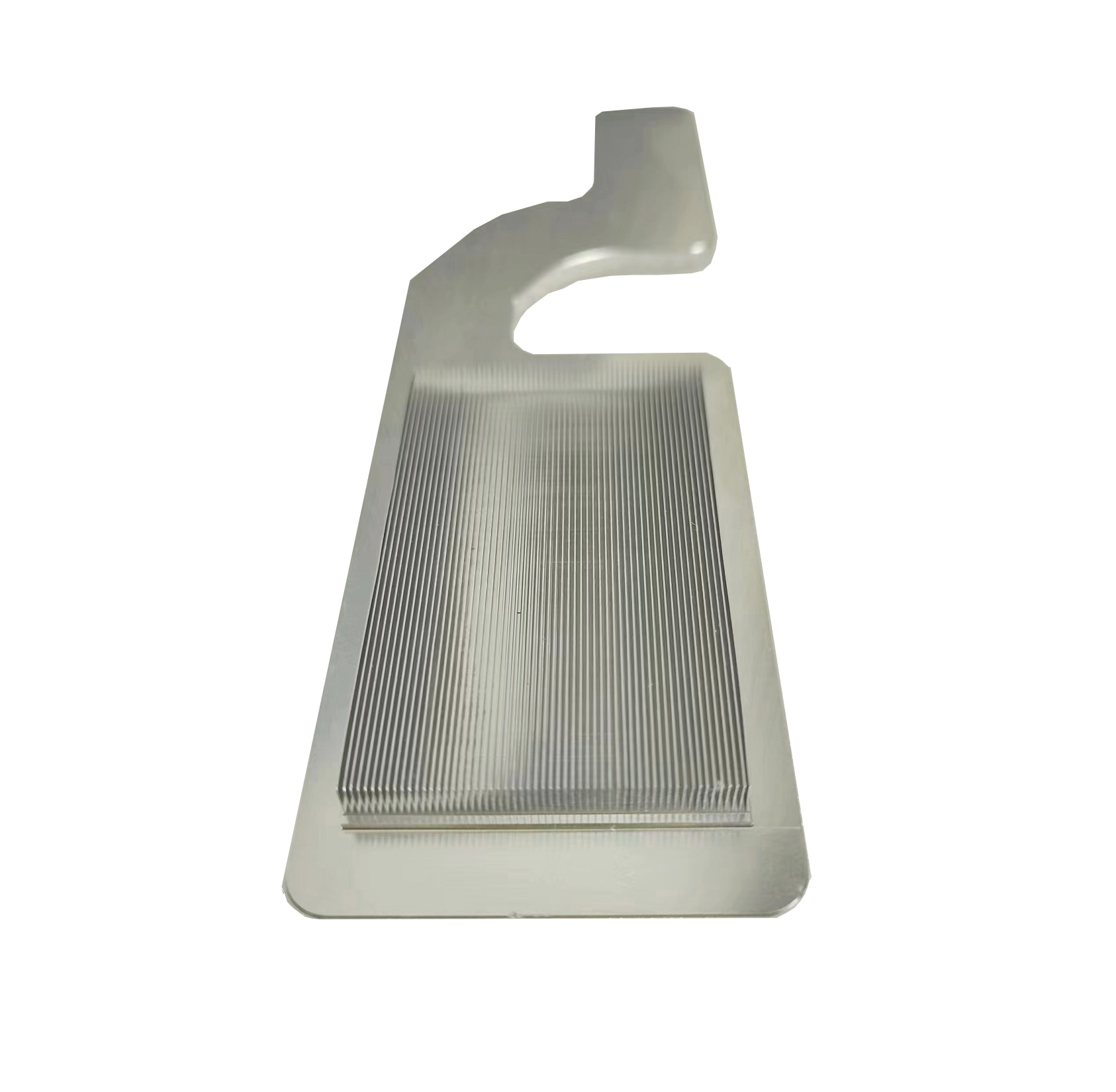
Why we use the wavy fin for the aluminum extrusion heat sink?
1. Increased Surface Area for Heat Transfer
- Core Mechanism: The wavy (undulating) geometry creates a larger effective surface area compared to straight/flat fins. This amplifies the contact area between the fin and the surrounding air, accelerating convective heat transfer.
- Example: A 10% increase in fin surface area can improve heat dissipation by ~15–20% in forced-air cooling scenarios, depending on airflow velocity.
2. Enhanced Airflow Turbulence
- Flow Dynamics: The wave pattern disrupts laminar air flow over the fins, inducing turbulence. Turbulent flow reduces the thickness of the boundary layer (the stagnant air layer adhering to the fin surface), which acts as a thermal insulator.
- Effect: Thinner boundary layers improve heat transfer coefficients. For natural convection (passive cooling), this can be critical in low-airflow environments (e.g., enclosed electronics).
3. Optimized Heat Sink Volume and Weight
- Space Efficiency: Wavy fins allow for a higher heat dissipation capacity in a smaller physical volume compared to straight fins. This is vital in compact designs (e.g., consumer electronics, automotive systems) where space is limited.
- Material Savings: By maximizing heat transfer efficiency per unit of aluminum, wavy fins reduce the overall material required, lowering weight and cost while maintaining performance.
4. Structural Strength and Thermal Fatigue Resistance
- Mechanical Robustness: The wavy shape introduces inherent structural rigidity to the fins, making them less prone to bending or deformation during manufacturing (e.g., extrusion, post-processing) or handling.
- Thermal Cycling: In applications with frequent temperature fluctuations (e.g., industrial lasers, power electronics), the wave geometry can better absorb thermal stress, reducing the risk of fin cracking or detachment from the base plate.
5. Compatibility with Manufacturing Processes
- Extrusion Feasibility: Wavy fins can be directly formed during aluminum extrusion, a cost-effective and high-volume manufacturing method. The dies for wavy fins are slightly more complex than straight fins but still commercially viable.
- Post-Processing Flexibility: After extrusion, wavy fins may require minimal or no additional machining, unlike more complex fin geometries (e.g., pin fins), which can reduce production time and cost.
6. Performance in Different Cooling Environments
- Forced Air Cooling: In systems with fans or blowers (e.g., servers, GPU coolers), the wavy fins leverage high airflow velocities to maximize heat dissipation. The turbulence enhances mixing of heated and cool air.
- Natural Convection: In passive cooling scenarios (e.g., LED lighting, some industrial equipment), the wavy design compensates for low airflow by improving natural convection through increased surface area and induced micro-circulations.
7. Noise Reduction in Forced Air Systems
- Acoustic Benefit: The wavy fin structure can disrupt the formation of airflow-induced noise (e.g., vortex shedding) compared to straight fins, making it suitable for noise-sensitive applications (e.g., medical devices, office electronics).
Potential Trade-offs and Considerations
- Airflow Resistance: Extremely tight or deep wave patterns may increase air pressure drop, requiring more powerful fans (higher energy consumption).
- Dust Accumulation: Complex geometries can trap dust in stagnant areas, reducing long-term efficiency. Regular cleaning or anti-dust coatings may be necessary.
- Extrusion Limitations: Very fine or high-aspect-ratio wavy fins may face manufacturing constraints (e.g., die wear, extrusion defects) and require careful design optimization.
Conclusion
wavy fin aluminum extrusion heat sink
Contact Us
Classification

// CONTACT US
Didn'T Find The Service You Want?
For inquiries about our products, please email to us and we will be in touch within 24 hours.
We Support Customization
Continue To Create Greater Value For Customers
Contact Us
No. 10, Minying West Road, Hengli Town, Dongguan City, China 523390