Vansim (Dongguan)Hardware Products Co., Ltd.




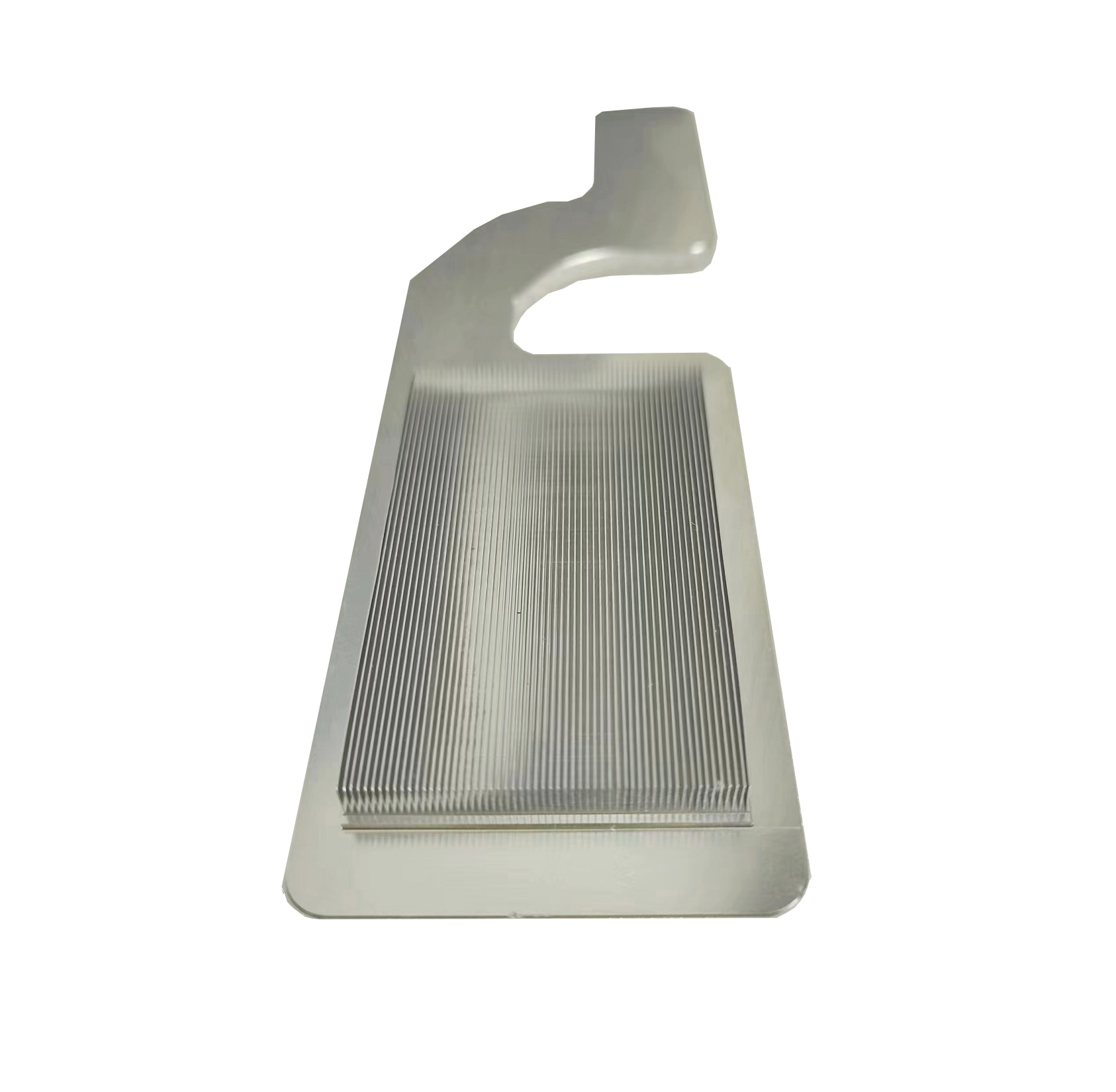
Application of Dual-Sided Heat Dissipation Structure Bonded Fin Heat Sink (Double-Side Composite Fin Heat Sink)
I. Brief Description of Structure
The dual-sided heat dissipation Bonded fin heatsink adopts a double-baseplate + double-sided high-density bonded fin sandwich structure: the heat source module is clamped between the upper and lower baseplates. Both sides of the baseplates can dissipate heat through bonded fin high-density fins to the airflow channels on both sides via convection. This design supports copper-aluminum hybrid material combinations, overcoming the limitations of extruded aluminum heatsinks which only allow single-sided heat dissipation and have a restricted aspect ratio.


II. Core Advantages (Unique Features of the Dual-Sided Structure)
Doubled Heat Dissipation Area: With the same footprint size, it effectively balances the temperature rise of high-power devices on both sides.
Balanced Temperature Control & Hotspot Mitigation: Dissipates heat on both sides, reducing the temperature gradient caused by unidirectional heat transfer from the chip. This minimizes thermal cycling stress and extends the lifespan of IGBT/SiC modules.
High Material Flexibility: The upper/lower baseplates and fins can be independently selected (e.g., copper baseplate + aluminum fins, or copper fins on both sides), balancing performance and cost. Heat pipes can also be embedded inside the baseplate for further heat spreading.
Simultaneous Dual-Direction Heat Conduction: Heat is transferred from the power devices simultaneously upward and downward to the fin arrays on both sides. The heat dissipation area is nearly doubled, and the overall thermal resistance is significantly reduced. This design is ideal for high-power-density applications, limited chassis space, and scenarios requiring double-sided power device placement.
Design Trade-off Reminder
The dual-sided structure doubles the number of fins, leading to a significant increase in overall airflow resistance. This requires matching with fans that have sufficient static pressure. The increased number of components and assembly steps also result in higher costs compared to standard single-sided bonded fin heatsinks. It is crucial to ensure unobstructed airflow in both the upper and lower air channels; blockage on one side will directly negate the benefits of the dual-sided heat dissipation.


Application Scenarios for Dual-Sided Heat Dissipation Structure Bonded Fin Heat Sink (Double-Side Bonded Fin Heat Sink)
I. Industrial Drives & High-Power Power Supplies
High-power frequency converters, high-voltage servo drives.
Industrial uninterruptible power supplies (UPS), high-voltage DC power supplies, high-power DC regulated power supplies.
High-power active power filters, SVG static reactive power compensation devices.
Characteristics: These applications often involve stacking multiple power modules. The dual-sided heat dissipation solution simplifies the overall system airflow layout and reduces the overall equipment size.
II. Lasers, Medical Equipment, and Specialized Applications
Industrial fiber laser power supplies, RF laser drive power supplies.
High-power power supply modules for medical imaging equipment.
Traction converters for rail transit, military radar transmitters.
III. Other Typical High-Heat-Flux Equipment
High-power induction heating power supplies, charging pile power modules, marine onboard converters.
✅ How to Quickly Determine When to Prioritize the Dual-Sided Bonded Fin Heatsink?
Power devices can be mounted on both sides, with heat sources clamped between the two baseplates.
The chassis has reserved airflow channels on the top/bottom or both sides to enable dual-sided ventilation.
The thermal solution is air-cooled (not liquid-cooled) and has stringent thermal resistance requirements.
The equipment aims for miniaturization, and the heatsink mounting footprint area is limited.
High-loss power devices like SiC/IGBT modules require strict hotspot thermal management.
Double-Sided Bonded Fin Heat Sinks
Contact Us
Classification

// CONTACT US
Didn'T Find The Service You Want?
For inquiries about our products, please email to us and we will be in touch within 24 hours.
We Support Customization
Continue To Create Greater Value For Customers
Contact Us
No. 10, Minying West Road, Hengli Town, Dongguan City, China 523390